AP Style Guide 2026: AI Citations & Company Style Updates
Anúncios
The AP Style Guide 2026 includes expanded guidance on artificial intelligence, while updated Associated Press newsroom standards emphasize accuracy, verification, transparency, and human editorial responsibility. Discover five practical recommendations for updating company editorial policies.
The AP Style Guide 2026 introduces important developments in artificial intelligence terminology, helping editors and communication professionals describe emerging technologies more accurately.
The Associated Press also updated its newsroom standards for AI use, reinforcing the importance of verification, transparency, and human responsibility throughout content production.
For companies updating their editorial policies, these developments provide an opportunity to establish clearer procedures for AI-assisted writing, research, multimedia, and disclosure.
Understanding the AP Style Guide 2026 Updates
The Associated Press released the 58th edition of its Stylebook in May 2026, featuring an expanded chapter dedicated to artificial intelligence.
Anúncios
The updated material addresses emerging terminology and helps journalists explain technological developments without relying on vague or potentially misleading expressions.
Understanding the AP Style Guide 2026 also requires distinguishing the Stylebook's language recommendations from AP's separate internal newsroom standards.
What Changed in the 2026 AP Stylebook?
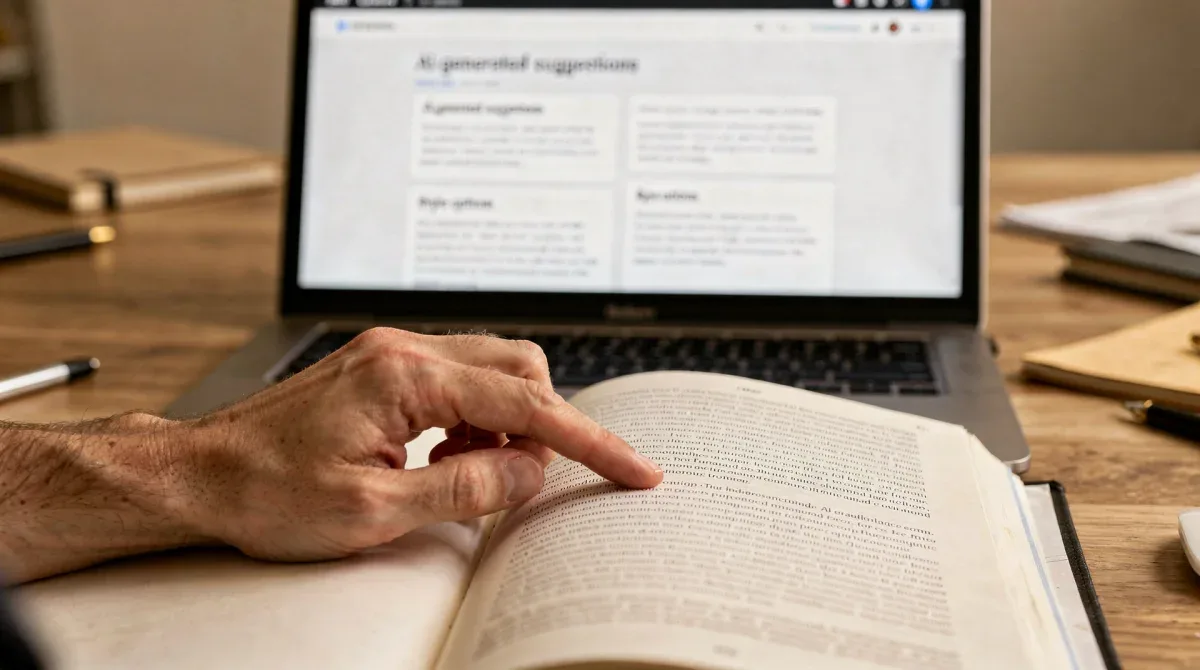
The expanded artificial intelligence chapter includes terminology related to AI agents, AI slop, and vibe coding, reflecting changes in the technology industry.
These additions help editorial teams communicate complex technological concepts using consistent language that readers can understand without extensive technical knowledge.
Companies can incorporate relevant terminology into their existing policies while reviewing how AI-related expressions are explained across articles and corporate communications.
AI-Assisted Content and Attribution
AI-assisted content may involve brainstorming, preliminary research, grammar corrections, text organization, or substantial generation of written material through automated systems.
These activities present different editorial considerations because minor assistance does not necessarily have the same implications as publishing extensive AI-generated passages.
Anúncios
Organizations reviewing the AP Style Guide 2026 should define internal expectations according to the actual role technology plays in producing content.
Five Practical Editorial Rules for Generative AI
The following five recommendations provide a practical framework for organizations seeking to strengthen editorial practices involving artificial intelligence and content attribution.
They reflect principles associated with AP's published guidance, but they should not be presented as five officially numbered new AP citation mandates.
Companies can adapt these recommendations to their existing workflows while maintaining responsibility for the accuracy and transparency of published information.
Rule 1: Treat AI Responses as Unverified Information
Generative AI systems can produce convincing explanations, statistics, quotations, and references without establishing whether the information comes from reliable sources.
Editorial teams should avoid treating chatbot responses as authoritative testimony or independent evidence when preparing news reports and factual publications.
When AI-generated material itself becomes relevant to a story, its origin and context should be explained rather than presented as verified human reporting.
Rule 2: Establish Clear Attribution for AI-Generated Text
Companies should determine when AI involvement materially affects a published article and whether readers need additional information about the production process.
An internal policy can distinguish routine proofreading assistance from extensive text generation, automated summaries, or other substantial contributions to published material.
When updating policies around the AP Style Guide 2026, organizations should prioritize meaningful transparency instead of assuming one disclosure formula applies universally.
Rule 3: Independently Verify AI-Assisted Research
AI tools can assist with organizing information, summarizing documents, and identifying research questions, but they cannot replace independent source verification.
Editors should confirm statistics, quotations, dates, and factual claims through reliable original material before approving content for publication.
This approach reduces the risk of fabricated citations and inaccurate summaries while preserving human accountability throughout the editorial process.
Rule 4: Apply Strict Standards to AI-Generated Multimedia
Generative systems can produce realistic images, audio recordings, and video material that audiences may mistake for authentic documentation of events.
AP's newsroom standards prohibit using generative AI to create, alter, or enhance news photographs, reflecting the importance of maintaining visual authenticity.
Organizations should establish clear policies distinguishing authentic news imagery from illustrations, marketing graphics, and other synthetic visual content.
Rule 5: Develop Consistent AI Disclosure Procedures
Editorial teams should establish procedures explaining when disclosures are appropriate, where they appear, and who approves the wording before publication.
Disclosures can describe substantial AI assistance or relevant synthetic content when those details are important for understanding how material was produced.
The AP Style Guide 2026 discussion should distinguish company disclosure practices from verified AP newsroom requirements to prevent misleading representations.
What the Associated Press Actually Announced in 2026
The Associated Press made two important announcements in 2026 concerning artificial intelligence: an expanded Stylebook chapter and updated newsroom standards.
Although these developments address related ethical concerns, they serve different purposes and should not be described as one newly established citation framework.
Companies can consult the original announcements to understand which practices AP publicly confirmed and which additional procedures require internal decisions.
The May 2026 Stylebook Release
On May 27, 2026, The Associated Press announced its 58th Stylebook edition, including expanded guidance on artificial intelligence terminology.
The official Associated Press announcement describes developments involving AI agents, AI slop, and other expressions appearing in contemporary technology discussions.
These additions provide a useful reference for organizations seeking consistent language while explaining new technologies to general audiences.
The July 2026 Newsroom Standards Update
In July 2026, AP updated its newsroom standards to address selected applications of artificial intelligence within journalistic production workflows.
The guidance allows certain assisted activities while emphasizing source verification, editorial responsibility, and restrictions involving synthetic news photography.
Organizations using the AP Style Guide 2026 as a reference should understand that internal AP newsroom rules are not automatically mandatory for every publisher.
Implications for Company Editorial Style Guides
Businesses that publish articles, reports, newsletters, and corporate communications can benefit from clearer policies governing generative AI and source attribution.
Existing editorial standards may already address accuracy and sourcing, but additional instructions can clarify situations involving automated summaries or synthetic content.
Updating these documents creates opportunities to strengthen consistency without replacing established responsibilities for fact-checking, legal review, and editorial approval.
Reviewing Existing Editorial Policies
Begin by examining existing requirements for research, quotations, source attribution, image selection, confidential information, and corrections to previously published content.
Identify situations where AI introduces uncertainty, especially when writers rely on generated references or use tools to summarize complex documents.
The AP Style Guide 2026 provides useful context for this review, but organizations should adapt their procedures to their actual publishing activities.
Aligning Technical and Corporate Communication Standards
Editorial standards should remain consistent across corporate publications while accommodating the specific requirements associated with technical documentation and specialized reports.
Organizations developing company editorial style guides can coordinate terminology, verification procedures, and disclosure practices across different departments.
Clear documentation helps prevent conflicting instructions when multiple teams use different tools or contribute to the same publication.
Maintaining Consistent Writing and Capitalization
Artificial intelligence introduces new terminology, but basic editorial conventions remain important for maintaining clear and professional communication across different publications.
Writers should continue applying established rules for capitalization, headlines, abbreviations, and technical expressions, including guidance explained in this AP Stylebook capitalization guide.
Consistency allows readers to concentrate on the information presented instead of encountering unnecessary differences in terminology or editorial formatting.
Developing Internal Training and Compliance Programs
Publishing an updated editorial document does not automatically ensure that writers understand its requirements or apply them consistently during daily production.
Organizations should provide practical examples demonstrating how to verify generated information, recognize misleading output, and communicate significant AI involvement.
Training aligned with the AP Style Guide 2026 can reinforce responsible editorial practices without requiring employees to memorize unsupported claims.
Training Writers and Content Creators
Training sessions can demonstrate how generative systems produce fabricated references, inaccurate statistics, and persuasive explanations unsupported by reliable source material.
Writers should practice locating original documents, comparing factual claims, and identifying situations where generated information requires additional investigation.
These exercises help employees recognize the limitations of AI tools while developing stronger independent research and verification skills.
Establishing Human Review Procedures
Human editors should assess factual accuracy, source reliability, attribution, disclosure requirements, and the suitability of multimedia content before publication.
Each organization can designate reviewers according to the complexity of its publications and the potential consequences of inaccurate information.
A documented approval process supports accountability and provides opportunities to correct problems before they reach readers or customers.
Challenges in Adopting AI Editorial Standards
Organizations implementing AI policies may encounter inconsistent tool capabilities, unclear employee responsibilities, and uncertainty concerning appropriate disclosure practices.
The technology also evolves rapidly, creating situations that older editorial guidelines may not address directly or comprehensively.
A practical approach to the AP Style Guide 2026 involves reviewing relevant developments while maintaining stable principles concerning accuracy and transparency.
Preventing Fabricated Sources and Citations
Generative AI systems may produce realistic references to publications, academic papers, government documents, or individuals without verifying their existence.
Writers should confirm that every cited source is authentic and that the material actually supports the claim attributed to it.
Independent verification is particularly important when content addresses financial information, legal developments, scientific findings, or recent public events.
Protecting Confidential Information
Editorial teams may work with unpublished documents, personal information, internal reports, and commercial materials requiring careful handling and restricted access.
Companies should define which information employees may enter into approved AI systems and when additional authorization is necessary.
These procedures can reduce unnecessary exposure of sensitive material while supporting responsible use of technology within established organizational workflows.
Recognizing Misleading AI-Generated Content
Artificial intelligence can produce convincing material that contains missing context, factual inaccuracies, misleading implications, or unsupported interpretations of complex events.
Editors should examine whether generated passages accurately represent the original sources and communicate important uncertainties rather than presenting assumptions as facts.
This responsibility remains essential regardless of whether the content was drafted manually, assisted by technology, or extensively rewritten through automated tools.
Ensuring Ethical AI Use in Content Production
Responsible content production requires accuracy, appropriate attribution, respect for intellectual property, and clear distinctions between authentic reporting and synthetic material.
Organizations should establish expectations that reflect the potential impact of inaccuracies on readers, business partners, and affected individuals.
The AP Style Guide 2026 can inform editorial language and professional practices while companies develop safeguards suited to their publications.
Respecting Original Sources and Creative Work
Using AI does not eliminate responsibilities concerning copyright, plagiarism, attribution, or the appropriate reproduction of another person's original work.
Writers should maintain accurate references and avoid presenting another organization's research or creative material as independently developed content.
Where licensing conditions are unclear, companies should evaluate the applicable requirements before reproducing protected text, images, or other creative assets.
Distinguishing Synthetic Images From Authentic Reporting
AI-generated photographs and illustrations may resemble authentic documentary evidence even when they depict situations that never occurred in reality.
Editorial teams should avoid presenting synthetic images as verified photographs of real events and establish appropriate disclosure procedures for relevant illustrative material.
Maintaining these distinctions helps readers understand the nature of visual content while reducing the potential for misleading interpretations.
Future-Proofing Your Company's Editorial Standards
Artificial intelligence technologies continue changing, creating new opportunities and challenges for organizations producing written, visual, and multimedia content.
Editorial policies should therefore be reviewed periodically to identify outdated terminology, unclear procedures, and emerging risks associated with new production tools.
Monitoring the AP Style Guide 2026 and subsequent professional guidance can support informed revisions without encouraging unnecessary changes to effective existing procedures.
Maintaining a Regular Review Schedule
Companies can establish scheduled reviews to evaluate whether their policies remain understandable, relevant, and appropriate for current editorial production methods.
Documented incidents, employee questions, and changes in approved technology may provide useful evidence when determining which procedures need revision.
Maintaining accessible policy versions also helps employees identify current requirements and understand the reasons behind important editorial decisions.
Keeping AI Terminology Accurate
New expressions frequently emerge in technology discussions, but unfamiliar terminology should be explained carefully when publishing content intended for general audiences.
The expanded AP Stylebook chapter provides terminology related to AI agents, AI slop, and vibe coding, reflecting developments in contemporary technology reporting.
Writers should prioritize accurate explanations over fashionable expressions that may obscure the capabilities or limitations of artificial intelligence systems.
The Role of Human Editors in an AI-Enhanced Landscape
Human editors remain responsible for evaluating sources, identifying missing context, correcting inaccuracies, and deciding whether published content meets professional standards.
AI systems may assist with selected tasks, but their output cannot independently establish factual reliability or replace meaningful editorial review.
Applying the AP Style Guide 2026 effectively requires combining useful technology with professional judgment, careful research, and transparent publishing practices.
Strengthening Fact-Checking Responsibilities
Editors should verify quotations, statistics, dates, and other factual details against reliable original sources before approving material for public distribution.
When AI-generated summaries are used, examining the underlying documents can help identify omissions, unsupported conclusions, and inaccurate interpretations.
This process supports editorial credibility while reducing the likelihood that generated errors become part of permanent published records.
Balancing Efficiency With Editorial Quality
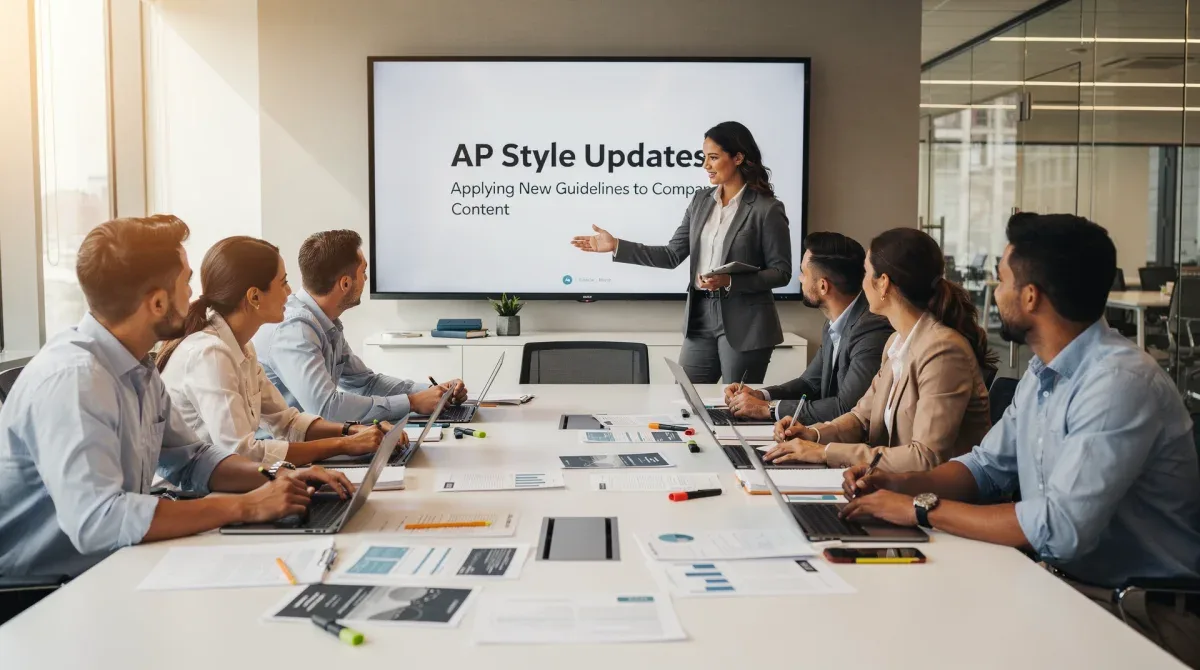
AI tools may help reduce time spent on repetitive tasks, but efficiency should not come at the expense of accuracy or meaningful context.
Editors need to determine whether automated assistance improves the finished publication and whether additional verification is necessary before release.
The most effective editorial workflows preserve human accountability while using technology selectively to support clearly defined production responsibilities.
Key Takeaways From the AP Style Guide 2026
The AP's 2026 developments highlight the importance of accurate AI terminology and reinforce established journalistic principles involving verification, transparency, and editorial responsibility.
Companies can translate these principles into practical internal policies covering AI-assisted writing, research, multimedia, disclosures, and human review procedures.
The table below summarizes the original article's suggested practices, which should not be interpreted as an officially numbered list of new AP Stylebook citation mandates.
Key Rule | Description |
|---|---|
No Direct AI Quotes | Avoid quoting generative AI directly; paraphrase and attribute instead. |
Text Attribution | Explicitly attribute significant AI-generated text within content or via editor's note. |
Research Verification | Human verification is mandatory for all AI-assisted research and data. |
Multimedia Labeling | Clearly label AI-generated or significantly altered images, videos, and audio. |
FAQ on AP Style Guide 2026 and AI Citations
What changed in the AP Style Guide 2026?
The 58th AP Stylebook edition introduced an expanded artificial intelligence chapter, including updated terminology covering AI agents, AI slop, and vibe coding.
Did AP introduce exactly five new AI citation rules?
The public announcements reviewed do not establish five formally numbered new citation mandates. The five recommendations discussed in this article provide a practical editorial framework.
When was the 2026 AP Stylebook released?
The Associated Press announced the 58th edition on May 27, 2026, highlighting expanded artificial intelligence guidance.
When did AP update its newsroom AI standards?
AP announced updated newsroom standards in July 2026, clarifying permitted AI-assisted activities and reinforcing human editorial responsibility.
Can generative AI be quoted directly?
AI-generated output should not be treated as independently verified human testimony. Its origin should be explained when the generated response itself is relevant to a story.
Does every use of AI require a disclosure?
Not necessarily. Disclosure requirements depend on applicable editorial policies and the significance of AI involvement in the published material.
Can AI-generated research be published without verification?
No. Important factual claims, quotations, statistics, and references should be independently checked against reliable sources before publication.
Can AI be used to create news photographs?
AP's newsroom standards prohibit generative AI from creating, altering, or enhancing news photography.
Are companies legally required to follow AP Stylebook rules?
There is no general legal requirement making AP Stylebook guidance mandatory for every company. Organizations may adopt its recommendations through internal policies.
How should companies disclose substantial AI involvement?
Disclosures should accurately explain the relevant role of AI tools and identify meaningful human editorial responsibility where necessary for reader understanding.
What is AI slop?
AI slop is a term commonly associated with low-quality, mass-produced content generated using artificial intelligence technologies.
What is vibe coding?
Vibe coding describes a programming approach involving natural-language instructions to AI tools that generate or modify computer code.
How can companies update their editorial guidelines?
Review existing policies, define approved AI activities, establish source verification procedures, clarify disclosure requirements, and provide appropriate employee training.
Who is responsible for AI-assisted editorial accuracy?
Publishing organizations and their designated human editors remain responsible for evaluating whether final content is accurate, appropriately sourced, and suitable for publication.
Conclusion
The AP Style Guide 2026 provides updated artificial intelligence terminology, while revised Associated Press newsroom standards emphasize verification, transparency, and professional accountability.
Companies can use these developments to establish practical editorial safeguards without incorrectly presenting internal recommendations as newly mandated AP citation rules.
By maintaining clear policies, reliable sources, responsible disclosures, and effective human review, organizations can incorporate AI assistance while protecting editorial credibility.