AP Stylebook Capitalization: Resolving Headline Disputes
Anúncios
AP Stylebook Capitalization Rules vs. Internal House Styles: Resolving 6 Common Headline Disputes examines how editorial teams can manage differences between established newswriting conventions and their own publication standards. Understanding headline capitalization, punctuation, proper nouns, and formatting helps editors maintain consistency without sacrificing clarity or brand identity.
AP Stylebook Capitalization Rules vs. Internal House Styles: Resolving 6 Common Headline Disputes addresses a recurring challenge for journalists, editors, and digital publishers: deciding which capitalization conventions should govern published headlines.
Although the Associated Press provides widely recognized editorial guidance, individual publications may adopt different approaches to headline presentation, particularly when choosing between sentence case and title case.
Understanding these differences helps editorial teams prevent inconsistent formatting, resolve disagreements efficiently, and maintain a professional reading experience across websites, newsletters, and other publishing platforms.
Understanding the Foundation: AP Stylebook Capitalization Rules
The Associated Press Stylebook provides editorial guidance on capitalization, punctuation, abbreviations, terminology, and other aspects of professional newswriting. Its recommendations are widely referenced throughout journalism and digital publishing.
Anúncios
For headlines written in AP's own news style, capitalization generally follows sentence case, meaning the first word and proper nouns are capitalized. The first word following a colon is also capitalized in headlines.
Understanding AP Stylebook Capitalization Rules is essential when comparing them with internal editorial policies, especially because some organizations choose title case for headings, articles, newsletters, and promotional content.
The Importance of Consistency in Headlines
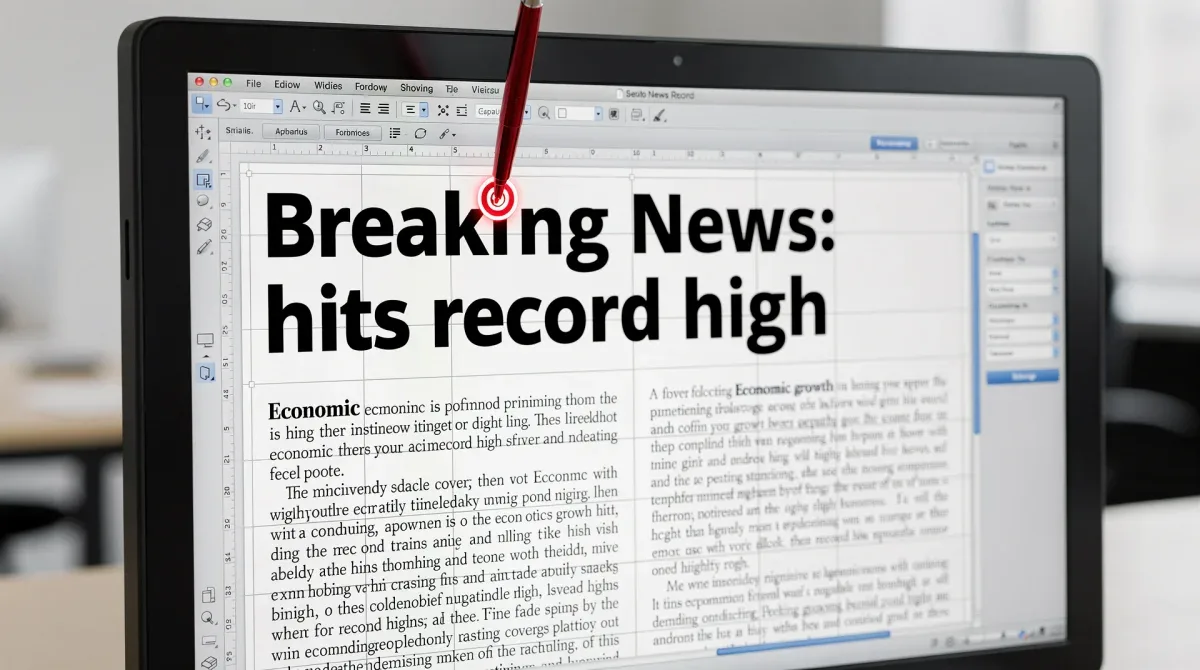
Consistent capitalization helps readers recognize the structure of headlines and creates a more predictable experience across different sections of a publication. It also makes editorial review easier for writers and copy editors.
A publication may prefer sentence case for news articles while using title case for certain marketing materials. Both approaches can be practical when their application is clearly documented and consistently maintained.
The challenge in AP Stylebook Capitalization Rules vs. Internal House Styles is not simply choosing which words receive capital letters, but establishing a reliable process for applying those decisions across every publishing channel.
Clarity: Headline formatting should support straightforward communication and accurate interpretation.
Consistency: Similar content should follow the same capitalization conventions.
Editorial Efficiency: Clear rules reduce unnecessary corrections and disagreements.
Brand Identity: A defined house style helps maintain a recognizable visual presentation.
Common Dispute 1: Articles, Conjunctions, and Prepositions in Headlines
One frequent capitalization disagreement involves short grammatical words such as articles, coordinating conjunctions, and prepositions. Their treatment depends heavily on whether the publication follows sentence case or title case.
In AP-style news headlines, ordinary words are generally lowercase unless they begin the headline, follow a colon, or require capitalization as proper nouns. This differs from many traditional title-case conventions.
Anúncios
Editorial teams reviewing AP Stylebook Capitalization Rules vs. Internal House Styles should first establish which capitalization system applies before debating individual words such as "and," "with," "from," or "the."
Navigating Short Words in Headline Capitalization
Under sentence case, a headline such as "New report examines housing costs in major cities" capitalizes the first word while leaving ordinary nouns, verbs, and prepositions lowercase.
A publication using title case might instead write "New Report Examines Housing Costs in Major Cities," capitalizing major words while leaving certain short articles and prepositions lowercase.
To avoid confusion, house style documentation should specify the capitalization method, explain exceptions involving proper names, and provide examples that editors can apply without making individual judgments.
Common Dispute 2: Capitalizing Nouns Following a Colon
Headlines containing colons are another source of disagreement, particularly when editors attempt to apply ordinary sentence punctuation rules to headline formatting.
Under AP's headline guidance, the first word following a colon is capitalized, regardless of whether the following material forms a complete sentence or a shorter phrase.
When resolving AP Stylebook Capitalization Rules vs. Internal House Styles, organizations should distinguish this headline-specific convention from rules that might apply differently in ordinary body text.
Consistency After Colons in Headlines
An AP-style headline might read "Housing market outlook: Buyers face higher costs," with "Buyers" capitalized because it immediately follows the colon.
Some organizations extend this approach across all titles and headings, while others use different formatting conventions in newsletters, navigation labels, or internal documents.
Editors can reduce inconsistencies by defining one standard for headlines and ensuring that templates, editorial checklists, and publishing software follow the same convention.
Common Dispute 3: Hyphenated Compounds in Headlines
Hyphenated compounds create additional editing challenges because their capitalization depends on grammatical structure, established spelling, and the headline system being used.
In sentence-case headlines, most ordinary hyphenated expressions remain lowercase unless they occur at the beginning of the headline or contain words that require capitalization independently.
The distinction becomes particularly important when publications switch between AP-style sentence case and title-case formatting, where different elements of a compound may receive initial capital letters.
Navigating Hyphenated Words in Headline Styles
In sentence case, an example might be "City announces long-term housing plan," where the compound adjective remains lowercase because it does not contain a proper noun.
A title-case headline may appear as "City Announces Long-Term Housing Plan," depending on the publication's rules for capitalizing hyphenated compounds and their individual elements.
When discussing AP Stylebook Capitalization Rules vs. Internal House Styles, editors should document common compounds, maintain consistent spelling, and avoid changing established terminology merely to create a more visually uniform headline.
Common Dispute 4: Proper Nouns and Adjectives Derived From Them
Proper nouns usually require capitalization regardless of whether a publication uses sentence case or title case. These include recognized names of individuals, places, companies, and institutions.
Adjectives derived from proper names can also require capitalization, although certain expressions may become generic through established usage and editorial convention.
Resolving AP Stylebook Capitalization Rules vs. Internal House Styles in this area requires attention to official names, current terminology, and the distinction between specific entities and generic references.
Ensuring Accuracy with Proper Nouns in Headlines
Expressions such as "American economy" and "Shakespearean drama" retain capital letters because they contain adjectives derived from recognized proper names.
Other expressions require closer examination because common usage may differ from the capitalization suggested by their historical origins or familiar grammatical patterns.
Editorial teams should consult authoritative references, maintain updated terminology lists, and document exceptions so that headline capitalization reflects established usage rather than personal preference.
Common Dispute 5: Titles of Works (Books, Movies, Songs)
Creative works introduce another editorial challenge because publications must decide how to present titles of books, films, television programmes, albums, and songs within headlines.
AP style generally uses quotation marks for the titles of many creative works, while other editorial systems may prefer italics for certain categories, especially books and films.
These differences affect both appearance and capitalization, making a clear publication policy necessary when a headline includes the title of an existing work.
Formatting and Capitalizing Creative Works in Headlines
When applying AP conventions, editors should preserve the appropriate treatment of creative titles while following the publication's headline formatting requirements.
For example, an entertainment publication may use italics for film titles, while a news organization following AP style may use quotation marks around the same title.
To resolve AP Stylebook Capitalization Rules vs. Internal House Styles, publishers should specify how creative works appear in headlines, body text, image captions, and promotional materials.
Common Dispute 6: Governmental and Organizational Terms

Government agencies, public institutions, and organizational names frequently create capitalization disagreements because official names and generic references follow different conventions.
For example, "Department of Justice" is a formal organizational name, while a later reference such as "the department" ordinarily functions as a generic expression.
Some internal house styles capitalize generic institutional references for emphasis, but this practice should be distinguished from the standard treatment of proper names under AP guidance.
Capitalizing Official Entities in Headlines
Official names such as "Federal Bureau of Investigation" and "United Nations" require capitalization because they identify specific institutions or organizations.
Generic alternatives such as "the bureau," "the agency," or "the organization" generally remain lowercase unless they appear at the beginning of a sentence or headline.
For additional guidance on AP Stylebook Capitalization Rules vs. Internal House Styles, editors can consult the official AP Stylebook editorial guidance, which provides explanations and examples for questions involving capitalization and other editorial conventions.
Key Point | Brief Description |
|---|---|
Articles, Conjunctions, Prepositions | AP news headlines generally use sentence case; title-case house styles may capitalize additional words. |
Nouns After Colons | AP headline guidance capitalizes the first word following a colon. |
Hyphenated Compounds | Capitalization depends on the headline system, proper names, and established compound spelling. |
Titles of Works | AP typically uses quotation marks for many creative titles, while other styles may prefer italics. |
Frequently Asked Questions About Capitalization Disputes
What is the primary goal of AP Stylebook Capitalization Rules?▼
The primary purpose of AP Stylebook Capitalization Rules is to promote consistent, accurate, and accessible editorial communication. Standardized conventions help journalists and editors present information clearly while reducing unnecessary differences between published materials.
Why do internal house styles often differ from AP Style?▼
Internal house styles may reflect a publication's brand identity, audience preferences, content formats, or established editorial practices. Some organizations use AP style as a foundation while documenting specific exceptions for headlines, marketing materials, and other communication channels.
How can publications resolve conflicts over headline capitalization?▼
Editorial teams can establish a written house style that identifies which AP conventions they follow and where exceptions apply. Providing examples, maintaining a shared reference document, and reviewing disputed cases consistently can reduce future disagreements.
Are there tools to help with AP Stylebook Capitalization Rules?▼
Yes. Editorial teams can use official AP Stylebook resources, proofreading software, content management checks, and internal style references to review capitalization. Automated tools should be checked against the publication's current rules because they may apply different capitalization systems.
What is the impact of inconsistent capitalization on readers?▼
Inconsistent capitalization can make a publication appear less carefully edited and may interrupt the visual consistency of headlines. Clear and predictable formatting supports readability, although accurate reporting and understandable language remain more important than capitalization alone.
Looking Ahead: Harmonizing Styles for Future Headlines
The discussion surrounding AP Stylebook Capitalization Rules vs. Internal House Styles highlights the importance of maintaining clear editorial standards as organizations publish across increasingly diverse digital platforms.
Successful editorial teams document their capitalization preferences, train writers to recognize exceptions, and review style decisions as publishing requirements evolve. This helps prevent repeated disputes and unnecessary corrections.
Ultimately, resolving the six common headline disagreements requires a practical balance between established AP guidance and clearly defined house style decisions. Consistent implementation allows publications to protect readability, improve editorial efficiency, and maintain a recognizable voice.