AMA Manual 2026 Updates: 5 Key Changes for Medical Writers
Anúncios
The AMA Manual 2026 Updates introduce important guidance on short-form references, inclusive terminology, age-related expressions, and medical abbreviations, alongside recent recommendations for accessible scientific figures.
The AMA Manual 2026 Updates provide important guidance for medical writers, editors, and researchers seeking to improve the accuracy, consistency, and accessibility of scientific publications.
Four revisions published in May 2026 address references, homelessness terminology, age-related expressions, and medical abbreviations. Earlier recommendations concerning scientific figures also remain relevant.
Understanding these developments alongside established ethical and statistical reporting standards can help professionals prepare clearer manuscripts and incorporate current medical writing practices into their workflows.
Understanding the Scope of the 2026 AMA Manual Updates
The AMA Manual of Style, 11th edition, continues to serve as an important reference for professionals involved in medical communication and scientific publishing.
Anúncios
Rather than introducing an entirely new edition in 2026, the editorial committee maintains the existing manual through periodic online revisions addressing specific publishing requirements.
Medical writers should distinguish newly published recommendations from established guidelines while reviewing how both apply to manuscripts, presentations, research reports, and educational materials.
The Evolving Landscape of Medical Communication

Medical communication continues to evolve as researchers adopt digital publishing platforms, new pharmaceutical terminology, advanced analytical methods, and more inclusive approaches to scientific language.
These developments require writers to maintain consistent terminology while adapting their work to different audiences, publication formats, and editorial requirements across scientific disciplines.
Reviewing current technical writing standards alongside established medical style guidelines helps professionals develop more accurate and accessible scientific content.
Key Change 1: Updated Guidance on Homelessness Terminology
Respectful terminology remains an important consideration in medical writing, particularly when describing individuals experiencing challenging social, economic, or health-related circumstances.
Medical writers should recognize how language can influence perceptions of vulnerable populations and whether particular expressions adequately represent the people discussed in research.
Anúncios
One practical priority for 2026 is reviewing terminology related to housing insecurity and ensuring that descriptions accurately reflect the characteristics of study participants.
Implementing Person-First Language
Person-first language generally emphasizes individuals rather than defining them exclusively through a medical condition, disability, socioeconomic circumstance, or other personal characteristic.
For example, referring to people experiencing homelessness provides a more individualized description than using collective labels that may obscure personal experiences.
Writers should also recognize that some communities prefer identity-first language, making context, individual preferences, and relevance important considerations when selecting appropriate terminology.
Key Change 2: Refined Guidance on Age-Related Terminology
Age-related terminology is particularly important in medical research because age can influence disease prevalence, treatment responses, clinical outcomes, and healthcare accessibility.
Broad descriptions may introduce ambiguity when readers need to understand the specific demographic characteristics of participants included within a scientific investigation.
Medical writers should evaluate whether age classifications provide sufficient information while avoiding language that unnecessarily reinforces stereotypes about different generations or patient populations.
Improving Precision in Age Descriptions
Whenever relevant, numerical age ranges can provide more useful information than broad expressions that describe individuals without clearly defining their demographic characteristics.
For example, describing participants as adults aged 65 years or older offers greater precision than using an undefined label such as elderly patients.
Research manuscripts should also maintain consistency between their methodology, results, tables, and discussion sections when presenting age-related information about study participants.
Key Change 3: New Short-Form Reference Guidance
Scientific information is frequently presented through conference posters, slide presentations, educational materials, and other formats where available space may be considerably restricted.
These limitations create challenges for medical writers who must balance accurate source attribution with readable layouts and practical restrictions on the amount of displayed text.
The latest guidance on short-form references addresses this need while reinforcing the importance of providing sufficient information for readers to identify original sources.
Applying Short-Form References in Scientific Presentations
Short-form references can help authors organize scientific presentations without overwhelming the available space, particularly when multiple studies support a single discussion point.
Writers should review the applicable reference requirements before preparing conference materials, ensuring abbreviated citations remain identifiable and consistent with organizer expectations.
These formats should not automatically replace complete references in traditional manuscripts, where journal-specific instructions and established citation requirements continue to apply.
Citing Preprints and Data Sets
Preprints and publicly available research data sets require careful attribution because they may provide important scientific information outside conventional peer-reviewed journal publications.
Medical writers should clearly identify preprints when discussing findings that have not yet undergone formal peer review, avoiding language that exaggerates their scientific certainty.
Data set references should provide relevant identifying information, including repository details, persistent identifiers, and version information when applicable to the referenced material.
Key Change 4: Updated Medical Abbreviations and GLP-1 Terminology
Medical terminology requires frequent evaluation as new treatments, pharmaceutical classifications, diagnostic approaches, and scientific concepts become more prominent within published research.
Consistent abbreviations can improve manuscript readability while helping researchers communicate complex clinical information without repeatedly including lengthy technical expressions.
Writers discussing metabolic health, diabetes management, and obesity treatments should pay particular attention to accurate terminology when describing relevant pharmaceutical drug classes.
Using GLP-1 RA Terminology Correctly
The abbreviation GLP-1 RA refers to a glucagon-like peptide-1 receptor agonist, a drug class discussed extensively in contemporary clinical research and medical literature.
Medical writers should distinguish pharmaceutical drug classes from individual medications, proprietary product names, and treatments that have different mechanisms of action.
Defining unfamiliar abbreviations appropriately and maintaining consistent terminology throughout manuscripts can help readers understand the clinical context without unnecessary interpretation difficulties.
Key Change 5: Refined Standards for Data Visualization and Presentation
Scientific figures and tables help researchers communicate complex information, making visual accuracy and accessibility important considerations when preparing medical manuscripts and educational presentations.
Recent AMA guidance emphasizes identifying the type of figure within its title or legend, supporting interpretation, accessibility, and the discovery of scientific information.
Although this particular recommendation was published before 2026, reviewing existing figures against the guidance remains a useful editorial practice during the current year.
Ensuring Clarity in Figures and Tables
Figures should contain understandable titles, appropriately labeled axes, clearly identified measurement units, and legends that help readers interpret the information being presented.
Identifying whether a visual represents a scatterplot, line graph, or another figure type can provide useful context, particularly for readers using assistive technologies.
Medical writers should also avoid misleading scales, unnecessary visual effects, and excessive decorative elements that may distract readers from the underlying scientific findings.
Refinements in Statistical Reporting and Methodology
Accurate statistical reporting remains an established component of responsible medical communication, although a comprehensive new statistical reporting revision was not confirmed among the May 2026 announcements.
Writers should continue reviewing statistical methods, measurement definitions, analytical assumptions, and the relationship between reported results and the original objectives of scientific investigations.
Clear descriptions of analytical procedures allow qualified readers to evaluate research findings more effectively and understand the limitations associated with particular statistical approaches.
Clearer Presentation of Statistical Results
Reporting relevant effect estimates and confidence intervals alongside probability values can help readers understand the magnitude and uncertainty associated with scientific findings.
Medical writers should distinguish statistical significance from clinical importance, recognizing that statistically detectable differences do not necessarily represent meaningful improvements in patient outcomes.
Subgroup analyses, missing data, multiple comparisons, and study limitations should also receive appropriate attention when they influence the interpretation of reported research results.
Ethical Considerations and Plagiarism Prevention
Scientific publishing depends on responsible authorship, accurate attribution, transparent reporting, and appropriate acknowledgment of contributions made by researchers and other participating professionals.
Existing AMA guidance addresses ethical challenges involving intellectual property, research integrity, publication practices, and the responsibilities associated with developing scientific manuscripts.
Medical writers should continue applying these principles during 2026 without incorrectly presenting every established ethical requirement as a newly introduced editorial policy.
Promoting Originality and Proper Attribution
Writers should appropriately cite borrowed ideas, research findings, data, and previously published material, even when presenting that information through original wording or summaries.
Artificial intelligence tools may introduce additional concerns involving accuracy, confidentiality, source verification, and disclosure, depending on the policies established by the intended publication.
Human authors remain responsible for reviewing submitted content, verifying its scientific accuracy, and ensuring compliance with applicable authorship, originality, and publication requirements.
Practical Steps for Medical Writers to Implement Changes
Implementing updated medical writing practices begins with identifying which recommendations apply to the organization's existing manuscripts, templates, educational materials, and editorial review procedures.
Teams can review commonly used medical terminology, reference formats, figure captions, and demographic descriptions to identify areas requiring appropriate adjustments or additional guidance.
Developing internal style guides and editorial checklists can help maintain consistency across projects while supporting effective collaboration between writers, researchers, and editors.
Training and Resource Utilization
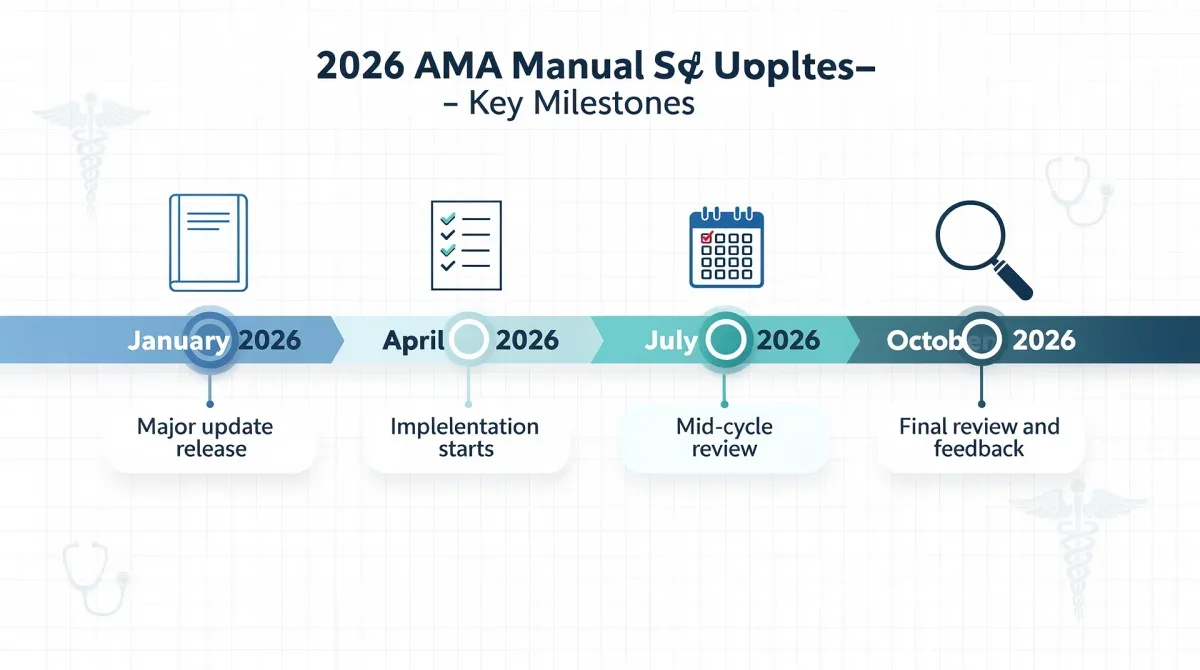
Professional development sessions can help medical writing teams understand updated terminology, improve reference management, and recognize differences between established standards and recently published recommendations.
The official AMA Manual of Style update page documents the May 2026 revisions and the November 2025 guidance on figure identification.
Regularly consulting authoritative resources allows professionals to verify editorial requirements before submitting manuscripts, particularly when journal instructions differ from internal organizational writing practices.
Updating Internal Editorial Checklists
An effective editorial checklist should address terminology consistency, reference accuracy, statistical presentation, figure accessibility, ethical disclosures, and compliance with the intended publication's requirements.
Organizations can assign responsibilities for reviewing different manuscript components, helping ensure that relevant scientific, editorial, and formatting concerns receive appropriate attention before submission.
Including revision dates in internal documentation can also help teams distinguish current recommendations from outdated instructions that may remain within older manuscript templates.
Anticipating Future Revisions and Staying Ahead
The AMA Manual of Style continues to evolve alongside changes in medical research, pharmaceutical development, digital publishing, and the expectations surrounding responsible scientific communication.
Medical writers should periodically review official announcements rather than relying exclusively on printed editions, outdated training materials, or unverified summaries of potential editorial revisions.
Maintaining organized reference resources and flexible editorial workflows can help professionals respond to future developments while preserving consistency across ongoing scientific writing projects.
Key Change | Impact for Writers |
|---|---|
Inclusive Language | Review homelessness terminology under the May 25, 2026, update to chapter 11.1. |
Age-Related Terminology | Review revised age-related guidance in chapters 11.7 and 11.12, published May 25, 2026. |
Short-Form References | Consult chapter 3.18, introduced May 25, 2026, for citations in space-limited formats. |
Medical Abbreviations | Review GLP-1 RA nomenclature added to chapter 13.11 on May 25, 2026. |
Data Visualization | Apply the November 27, 2025, guidance in chapter 4.2.7 concerning figure types in titles and legends. |
Frequently Asked Questions About AMA Manual Updates
What is the primary goal of the 2026 AMA Manual of Style updates?
The updates address specific editorial needs involving short-form references, homelessness terminology, age-related descriptions, and clinical abbreviations to support clearer and more consistent medical communication.
How will the inclusive language guidelines impact medical writers?
Medical writers should review descriptions of patient populations, use respectful terminology, and provide precise demographic information while considering relevant context and individual preferences.
Are there new requirements for citing digital-only research?
The confirmed 2026 citation update concerns short-form references. Guidance for preprints, data sets, and other digital research sources already exists within the 11th edition.
What changes should writers expect in statistical reporting?
No broad statistical reporting revision was confirmed among the May 2026 updates. Writers should continue following established guidance on effect estimates, confidence intervals, and methodology.
Why is ethical consideration emphasized in these updates?
Ethical principles remain essential for maintaining scientific integrity through accurate attribution, responsible authorship, appropriate disclosures, and verification of content, including material developed with AI assistance.
Looking Ahead: The Enduring Impact of AMA Style Updates
The AMA Manual 2026 Updates demonstrate the importance of maintaining accurate terminology, accessible presentation formats, and consistent editorial practices throughout the scientific publishing process.
Medical writers can strengthen their work by incorporating confirmed revisions while continuing to follow established principles of research transparency, statistical accuracy, and responsible authorship.
Ultimately, consulting official AMA resources and publication-specific instructions remains the most reliable approach to producing professional, trustworthy, and accessible medical content in 2026.